Still Blinking? vs Life360: Surveillance vs Privacy-First Safety
When caring for an aging parent, an independent loved one, or simply protecting yourself while living alone, peace of mind is essential. However, the modern safety tech landscape has created an uncomfortable compromise: to keep someone safe, you must watch everything they do.
Apps like Life360 have popularized continuous location sharing. But while real-time GPS tracking may work for tracking teenage drivers or managing family road trips, applying continuous surveillance to independent adults and seniors often creates resentment, drains battery life, and erodes dignity.
Caring should never mean watching. Here is how continuous surveillance models compare to a modern privacy-first autonomy model, and why non-intrusive background monitoring like Still Blinking? offers a better path forward for independent living.
The Core Philosophy: Watching People vs Watching Over Them
The fundamental difference between Life360 and Still Blinking? comes down to architecture and philosophy.
The Continuous Surveillance Model (Life360)
Life360 relies on continuous active tracking. It monitors real-time GPS coordinates, driving speeds, battery levels, and geofenced arrivals and departures.
While powerful in specific contexts, continuous tracking turns relationships into micro-management:
- Zero Privacy: Every trip to the grocery store, pharmacy, or neighbor’s house is broadcast to a family circle.
- Anxiety Amplification: Loved ones frequently check maps, wondering why someone hasn’t moved in ten minutes or why a route changed.
- High Friction: Battery drain from constant GPS pings often leads users to disable location services entirely, defeating the purpose of safety apps.
The Privacy-First Autonomy Model (Still Blinking?)
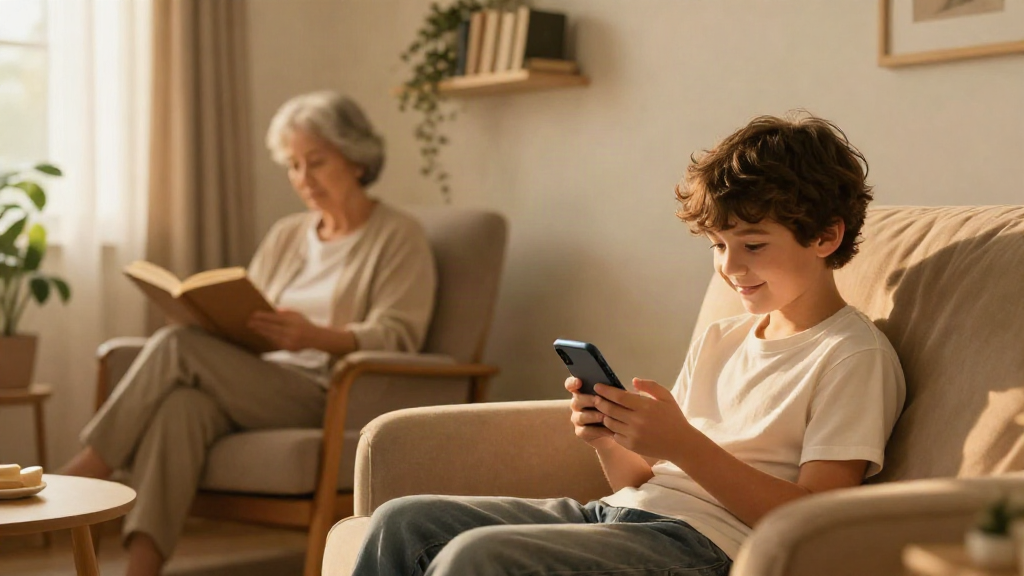
Still Blinking? operates on a quiet, non-intrusive principle: safety that runs quietly in the background without cameras, location tracking, or mandatory daily check-ins.
Instead of broadcasting whereabouts, Still Blinking? monitors for normal signs of daily device activity. As long as normal activity occurs, the app stays silent. A trusted Care Circle is only notified when something appears unusually quiet and it may genuinely be time to check in.
Feature-by-Feature Comparison
| Feature | Continuous Surveillance (Life360) | Privacy-First Autonomy (Still Blinking?) |
|---|---|---|
| Location Tracking | Real-time 24/7 GPS coordinates | No GPS tracking, Emergency-Only Location |
| Camera & Video | Often paired with home monitoring | No cameras or video |
| Daily Friction | Battery drain, map checking | Zero daily check-in chore |
| Emergency Trigger | Manual in-app SOS, crash detection | Hands-free iOS Voice SOS (Siri Shortcuts) |
| Independence & Dignity | High feeling of being monitored | Full autonomy preserved |
| Battery Impact | High (constant background location) | Minimal (efficient background heartbeat) |
Why Independent Adults Reject Surveillance Apps
For solo dwellers, older adults, and independent seniors, privacy is directly tied to dignity. Nobody wants to feel managed or tracked like a toddler. When adult children suggest location sharing or in-home cameras, the reaction is often defensive:
- The Burden of Being Watched: Knowing family members can see every movement creates social discomfort and hesitation.
- False Alarms from Forgotten Check-Ins: Traditional senior check-in apps require tapping a daily button. If a parent forgets to tap in because they are gardening or reading, frantic calls follow.
- App Abandonment: Intrusive apps get uninstalled or have their permissions revoked, leaving vulnerable individuals with zero safety net.
Still Blinking? solves this by eliminating the daily checklist. It acts as a digital heartbeat. If you are going about your routine, your loved ones know you are well without needing a map coordinate to prove it.
Out-of-Reach Lifelines: Hands-Free Safety
An emergency rarely happens when a phone is conveniently in hand. In slip-and-fall scenarios or medical distress, a phone is often resting across the room on a charging stand or night table.
Continuous GPS cannot call for help if an individual cannot reach their screen.
Still Blinking? bridges this vulnerability with iOS Voice SOS, engineered using Apple Shortcuts. Users can trigger an immediate distress alert to their Care Circle using simple, instinctive voice commands from across the room. Without touching the device or unlocking the screen, help is alerted instantly.
Choosing the Right Model for Your Family
When evaluating safety options for yourself or someone you care about, consider the goal:
- Choose a surveillance model if you need turn-by-turn tracking for teen drivers or coordinated transit monitoring.
- Choose a privacy-first autonomy model if you want non-intrusive reassurance for someone living independently, preserving their dignity, battery, and peace of mind.
Caring does not require surveillance. With Still Blinking?, you give your loved ones their independence back while ensuring a reliable safety net is always active.