Transitions are rarely easy. When a parent decides to stay in the home they love—even as they age and live solo—it’s a victory for their independence, but a source of quiet anxiety for everyone else.
We often think “safety” means installing grab bars and hiding the rug corners. Those are important, but true safety is about the system you build around them. If the day-to-day rhythm of their life is protected, they can live with dignity and you can sleep through the night.
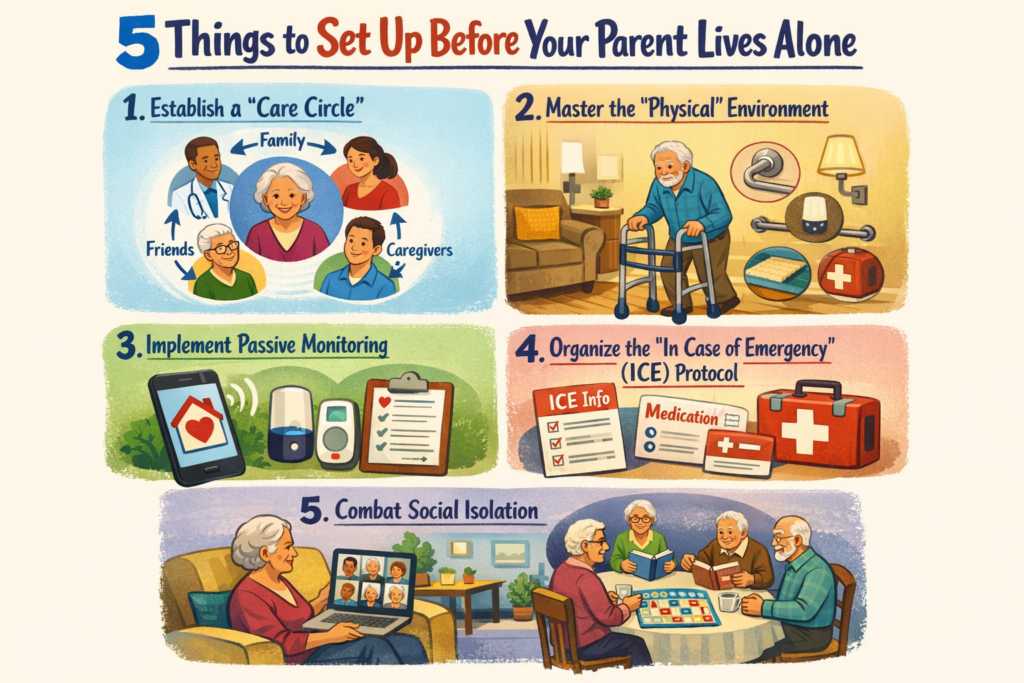
Here are the five essential pillars to set up before your parent begins their solo-living journey.
1. Establish a “Care Circle”
Safety shouldn’t fall on just one person’s shoulders. A “Care Circle” is a small, dedicated group of family members, trusted neighbors, or close friends who agree to look out for one another.
- The Check-in Chain: Don’t just rely on random phone calls. Set a schedule. Who calls on Monday? Who stops by on Thursday?
- The Keyholder: Ensure at least two people in the circle have a physical key or the smart lock code to the house.
- Shared Information: Use a shared digital space (like a group chat or a dedicated app) where everyone can see a quick “all clear” for the day.
2. Master the “Physical” Environment
Most falls happen in the bathroom or in the transition between rooms. You don’t need to turn the house into a hospital, but you do need to remove the obstacles.
- Lighting is Everything: Install motion-sensor lights in hallways and bathrooms. As vision fades, navigating a dark house at 2:00 AM becomes the highest risk factor for a fall.
- The “Trip” Audit: Walk through the house. If there is a rug that isn’t taped down, a cord crossing a walkway, or a threshold that sticks up too high—fix it today.
- Communication “Reach”: If they fell right now, could they reach a phone? If the answer is “maybe,” the physical environment isn’t ready yet.
3. Implement Passive Monitoring
We’ve all heard the phrase: “Silence is the loudest alarm.” Traditional “panic buttons” are great, but they require the parent to be conscious and mobile enough to press them.
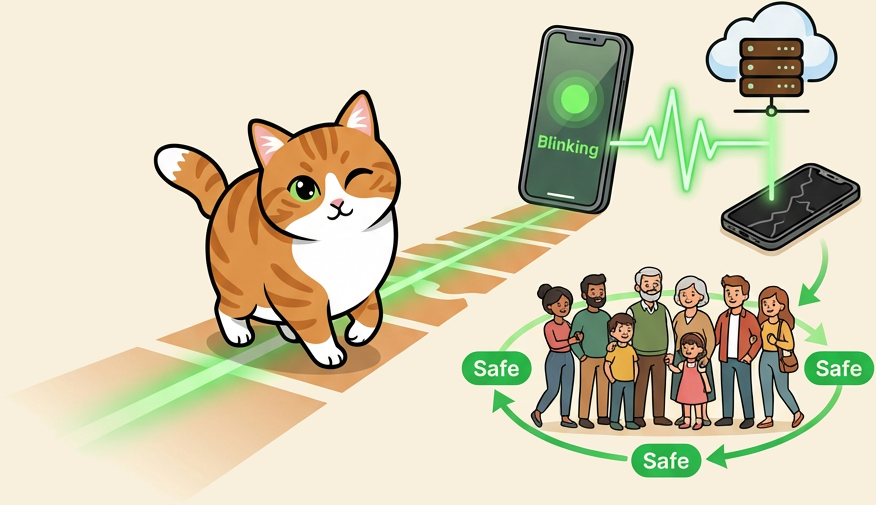
Passive monitoring is the “Digital Heartbeat” of a home. It looks for activity without invading privacy:
- Activity Sensors: Smart tools can now detect if a fridge has been opened, a light has been turned on, or a phone has been unlocked.
- The “No-News-is-Bad-News” Logic: Instead of an alarm that goes off when something happens, you want a system that alerts you when something doesn’t happen. If they haven’t “blinked” or moved in 24 hours, that’s when the circle steps in.
4. Organize the “In Case of Emergency” (ICE) Protocol
When an emergency happens, minutes matter. You don’t want to be hunting for a medication list or a doctor’s phone number while in the back of an ambulance.
- The “Vial of Life”: Keep a physical list of medications, allergies, and insurance info on the side of the refrigerator. Paramedics are trained to look there first.
- Legal Access: Ensure that Power of Attorney (POA) and healthcare proxies are signed, scanned, and accessible to the primary members of the Care Circle.
- Digital Access: Does someone have the password to their phone? In a crisis, their contact list is your most valuable asset.
5. Combat Social Isolation
Physical safety is the priority, but emotional safety is the longevity play. Isolation leads to cognitive decline and depression, which in turn leads to physical accidents.
- Low-Barrier Tech: Set up a dedicated tablet or a “Grandpad” that stays plugged in and has one-touch video calling.
- The “Third Place”: Encourage a routine that gets them out of the house once a day—the library, a coffee shop, or a neighbor’s porch.
- Reciprocal Caring: Remind your parent that they aren’t just being “watched”—they are also watching over you. Giving them the role of “Guardian” over their grandkids or your own safety keeps them engaged and empowered.
The Bottom Line
Setting your parent up to live alone isn’t about taking away their freedom; it’s about building a net so they can fly. When they know someone is listening for their “heartbeat,” they can focus on enjoying their home, and you can focus on enjoying your time with them.
Which of these five pillars do you feel is currently the biggest gap in your parent’s solo-living plan?