Every day, millions of adult children across the United States ask themselves the same sequence of quiet, anxious questions: Did Mom make it to her doctor’s appointment? Did Dad remember to eat lunch? Is tonight the night the phone rings with bad news?
As our population ages, a beautiful sentiment has taken hold of our culture: the desire for our parents to grow old in the comfort of their own homes. We call it “aging in place.” But aging at home is rarely a solo act. The truth we seldom talk about is that the entire framework of independent senior living in America does not rest on a robust government system or high-tech institutional infrastructure.
It rests almost entirely on the steady, unpaid, and often exhausting efforts of adult children.
The Invisible Economy of Caregiving
Senior care in the U.S. leans heavily on family members who do the work for free. According to recent data, there are now approximately 63 million family caregivers in America—a staggering number that has grown by nearly half in just a single decade.
Because this care happens behind closed doors—in private kitchens, living rooms, and pharmacies—its economic impact is largely invisible to the public. However, the numbers tell a different story. The AARP estimates the economic value of America’s unpaid family caregiving at a massive $600 billion a year.
To put that into perspective, $600 billion is more than the total annual spending on federal Medicaid. Yet, almost none of this immense financial contribution appears in our official calculations of the cost of senior care. We treat it as a personal family obligation rather than the massive economic engine that it is.
The Hidden Hurdles of the “Sandwich Generation”
While the economic weight is substantial, the human cost is where the system truly fractures. The physical and emotional toll on adult children is well documented:
- The Health Decline: Family caregivers regularly report higher chronic stress, sleep deprivation, and a measurable decline in their own physical health.
- The Financial Strain: From missing work hours to paying out-of-pocket for groceries, medications, and home modifications, taking care of an aging parent directly impacts an adult child’s career trajectory and personal savings.
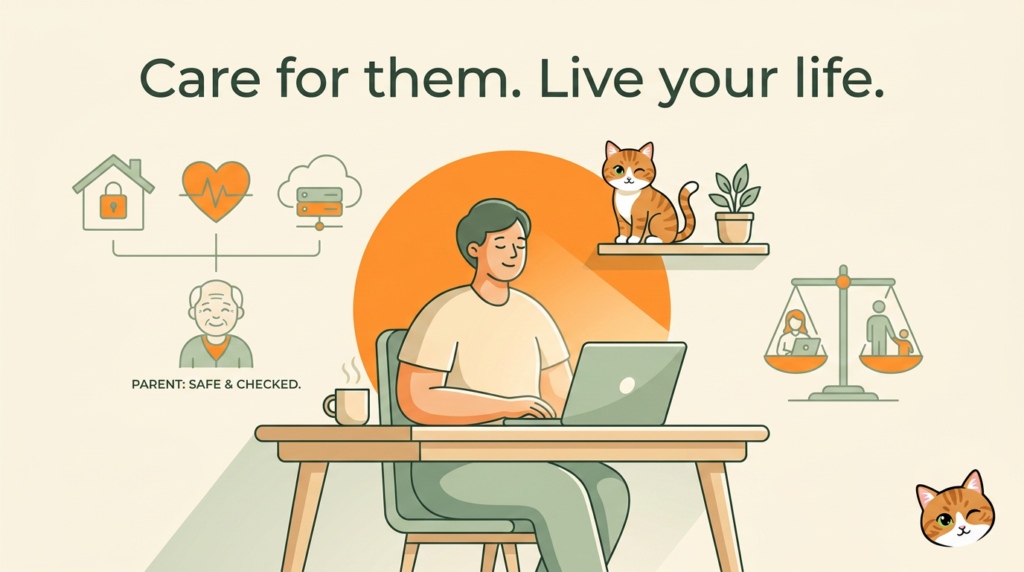
- The Double Burden: This pressure falls hardest on the “Sandwich Generation”—those who are simultaneously working full-time jobs, raising their own young children, and keeping a watchful eye on aging parents.
We heavily lean on families to make later life work for seniors, and then we act surprised when those adult children reach their emotional and physical limits.
Why Privacy-First Safety Networks Matter
The hardest hurdle for family caregivers isn’t the physical labor; it’s the constant, low-level static background anxiety. It’s the panic that sets in when Mom doesn’t answer her phone on the third ring.
Unfortunately, many of the standard options available today miss the mark. Invasive tracking apps that stream a parent’s live location 24/7 feel like surveillance, stripping independent seniors of their dignity and straining the parent-child relationship. On the other hand, traditional emergency buttons only work if a parent is wearing them and conscious enough to push them.
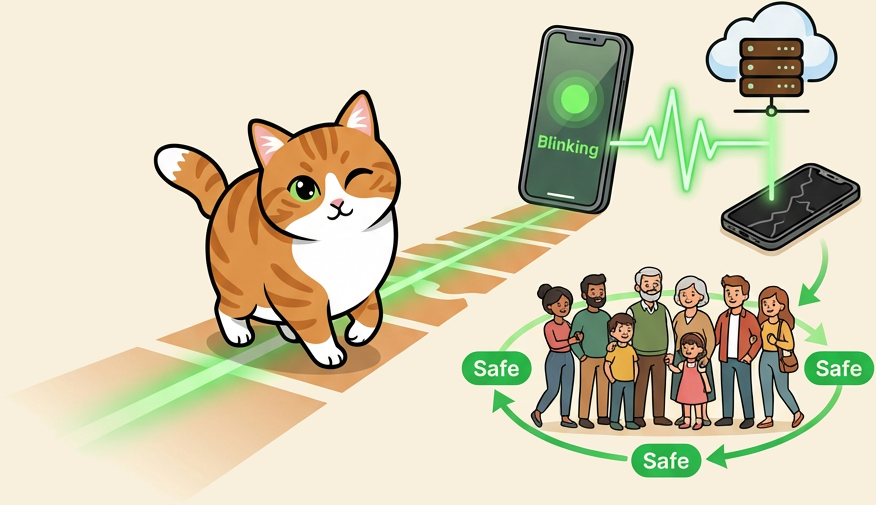
Preventing these silent crises shouldn’t require turning an aging parent’s home into a digital surveillance state. Instead, we need to find ways to offer adult children passive, reliable visibility—a simple confirmation of life—without stripping independent seniors of the privacy and independence they deserve.
Moving Forward
A societal structure that depends this much on its family caregivers owes them far more than it currently gives. Adult children deserve better support systems, more community recognition, and smarter, less intrusive tools to ease their daily anxiety.
Until our systemic infrastructure catches up to the reality of the aging crisis, the best thing we can do for family caregivers is to provide them with peace of mind. Because when we take care of the caregiver, we ultimately provide better, safer, and more dignified care for the parent.